

When most people imagine a career in film, they picture themselves in one of two spots: in front of the camera as the star, or sitting in the director’s chair yelling “Action!”
But the magic of filmmaking is a massive collaborative effort. If you’ve ever stayed in the theater to watch the credits roll, you know the list of names goes on for minutes. Who are these people? What is a “Best Boy”? What does a “Grip” actually grip?
At Palm Beach Code School, our Digital Filmmaking Program teaches you to wear many of these hats. By understanding every role on set, you become a better filmmaker, whether you ultimately want to direct, edit, or light the scene.
Here is an in-depth guide to the jobs connected to filmmaking—from the people running the show to the technical wizards who make it look cinematic.
1. The “Above the Line” Leaders
These are the primary creative decision-makers. They are usually the first hired and the last to leave.
-
The Producer: The CEO of the movie. They find the script, raise the money, hire the crew, and ensure the film comes in on time and under budget.
-
The Director: The creative captain. They are responsible for the artistic vision, guiding the actors’ performances, and deciding the visual style of the film.
-
The Screenwriter: The architect. They write the script (screenplay) that serves as the blueprint for the entire production.
2. The Production Department (Logistics)
If the set was a military operation, this department would be the generals and lieutenants ensuring the battle plan is executed.
-
Unit Production Manager (UPM): They manage the budget and day-to-day administration. They approve timecards, call sheets, and equipment rentals.
-
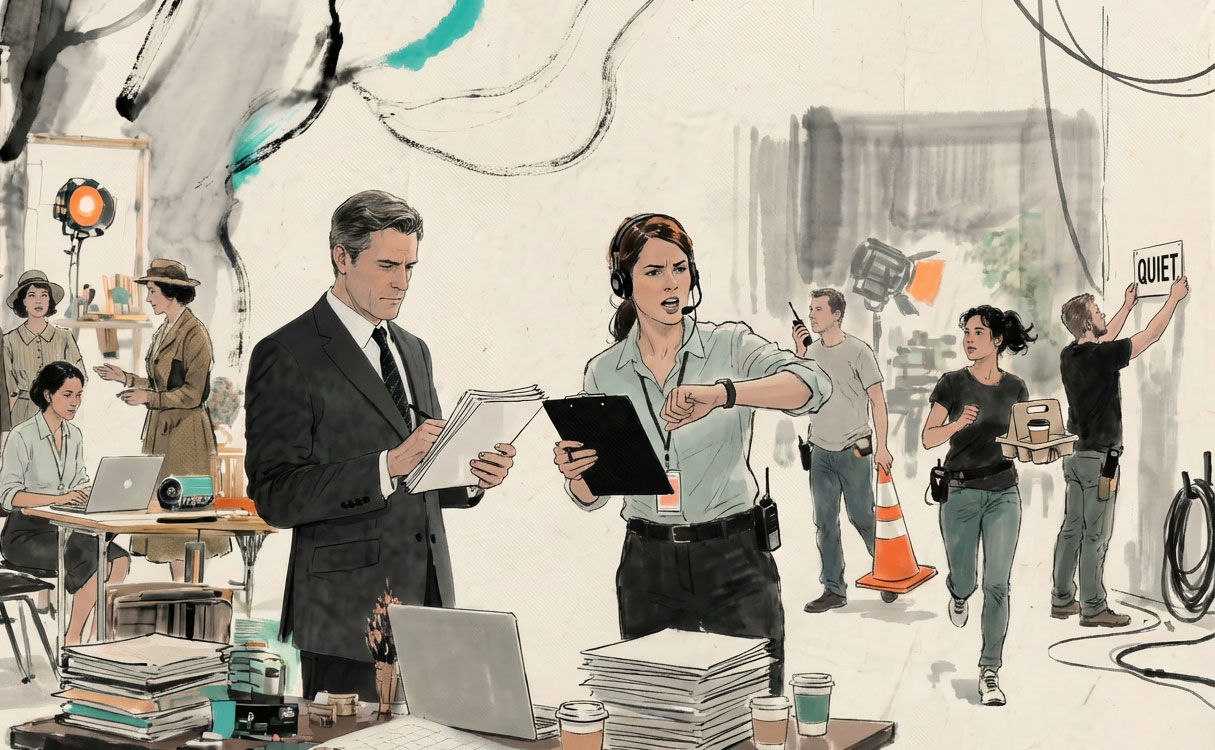
1st Assistant Director (1st AD): The director’s right hand and the timekeeper. They don’t direct actors; they run the set. If the crew is falling behind schedule, the 1st AD is the one to get things moving.
-
2nd Assistant Director: They create the “Call Sheet” (the schedule for the next day) and manage the background actors (extras).
-
Production Assistants (PAs): The entry-level heroes of the set. They stop traffic, lock down the set for quiet, fetch coffee, and handle any task that pops up. (Fun fact: Almost everyone in Hollywood started as a PA!).
3. The Camera Department (The Eyes)
This team is responsible for physically capturing the image.
-
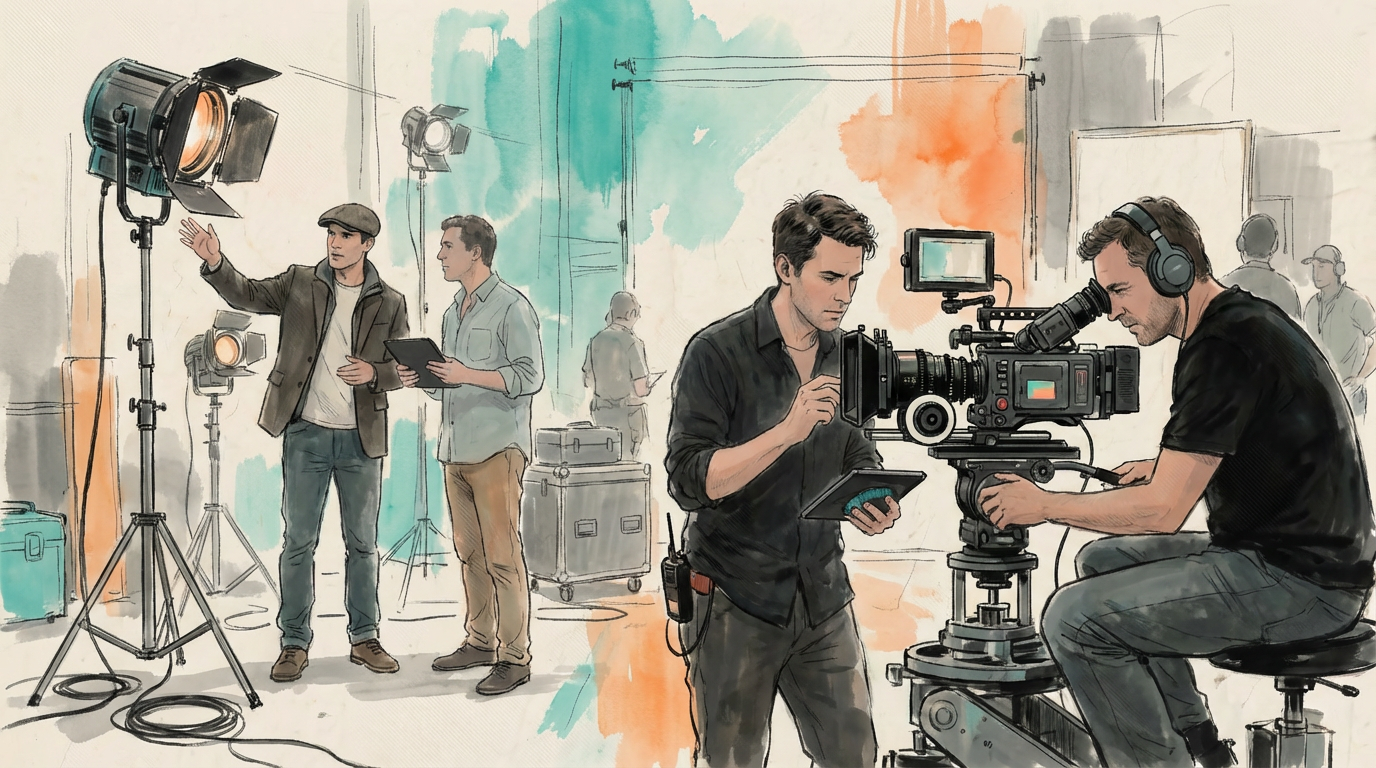
Director of Photography (DP) / Cinematographer: The head of the camera and lighting departments. They work with the Director to decide how the movie looks—lighting, shadows, color, and composition.
-
Camera Operator: The person physically looking through the viewfinder and maneuvering the camera during the shot.
-
1st Assistant Camera (1st AC): Also known as the “Focus Puller.” Their main job is keeping the image sharp. If the actor moves toward the camera, the 1st AC must adjust the lens focus instantly.
-
2nd Assistant Camera (2nd AC): They operate the slate (the clapperboard that goes clap before a scene). This syncs the audio and video for the editor.
4. Lighting & Electric (The Illumination)
Cameras need light to see, and cinematic lighting requires a specialized team.
-
Gaffer: The chief lighting technician. The DP asks for a specific “look” (e.g., “make it look like sunset”), and the Gaffer designs the lighting setup to achieve it.
-
Best Boy Electric: The Gaffer’s second-in-command. They manage the inventory, the electrical load (so you don’t blow a fuse), and the logistics of the lighting truck.
5. The Grip Department (The Support)
“Grips” are the engineers of the set. They don’t touch the lights (that’s the Electric department); they shape the light and support the camera.
-
Key Grip: The head of the department. They supervise the rigging of equipment.
-
Dolly Grip: A specialized technician who pushes the “Dolly” (a cart on tracks that the camera sits on). They must move the camera perfectly smoothly in time with the actors’ movement.
-
Grips: They build scaffolding, set up tripods, and use “flags” and “silks” to block or diffuse light.
6. The Sound Department (The Ears)
Bad audio ruins a movie faster than bad video. This team ensures every line of dialogue is crisp.
-
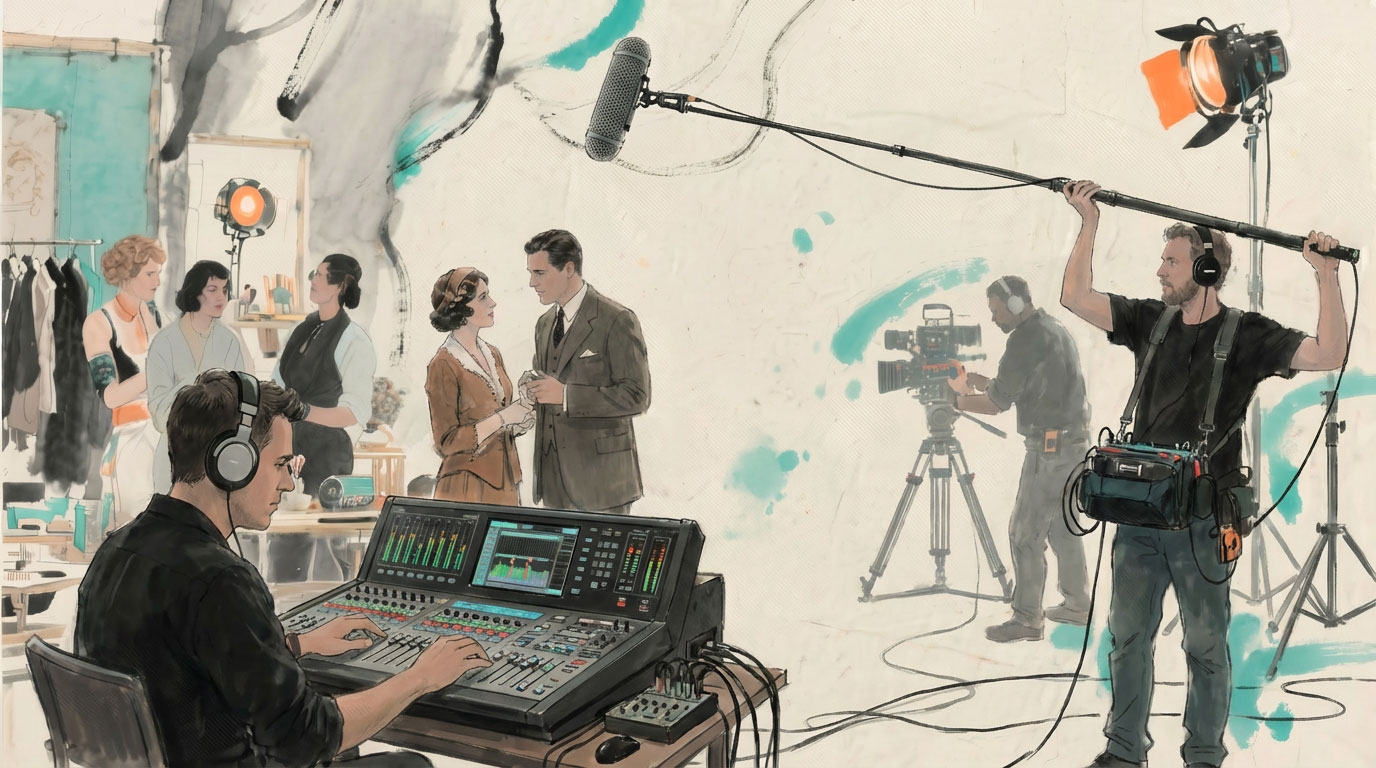
Production Sound Mixer: They monitor the audio levels on set, ensuring no background noise (like a plane overhead) ruins the take.
-
Boom Operator: They hold the long pole (boom) with the microphone on the end. Their goal is to get the mic as close to the actors as possible without dipping into the camera frame.
7. The Art Department (The World)
Everything you see on screen that isn’t an actor was put there by the Art Department.
-
Production Designer: They design the overall visual “vibe” of the film—the sets, the color palette, and the locations.
-
Art Director: They oversee the construction and painting of the sets.
-
Set Decorator: They fill the room with details—books on shelves, rugs, lamps, and furniture.
-
Props Master: They are in charge of anything an actor touches or holds (phones, coffee cups, weapons, food).
-
Hair, Makeup, & Wardrobe: Three distinct departments that ensure the actors look the part, from period costumes to special effects makeup (like bruises or alien prosthetics).

8. Post-Production (The Magic)
Once the filming stops, the movie is only half done.
-
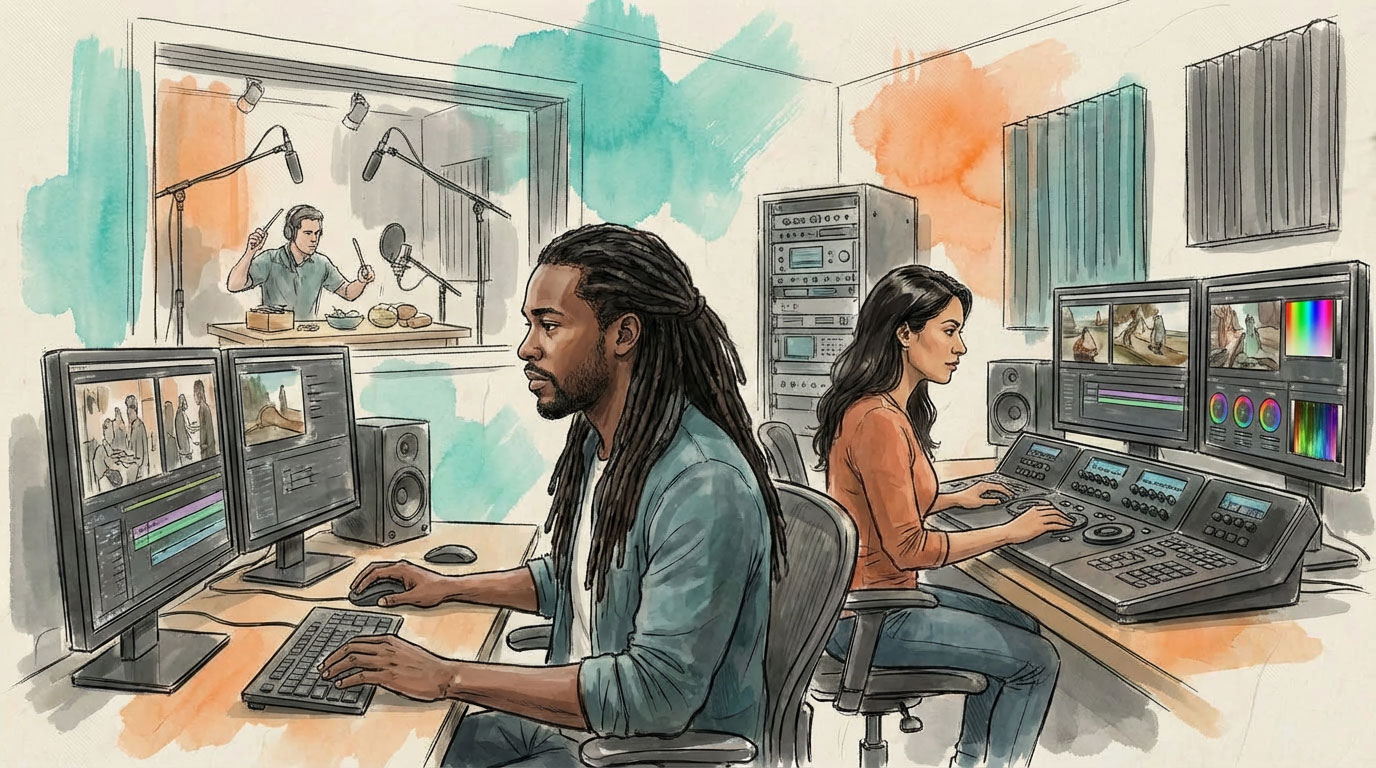
Editor: They take hours of raw footage and assemble it into a coherent story. They determine the pacing, rhythm, and emotional impact of the film.
-
Colorist: They adjust the colors of the footage to ensure consistency and create a mood (e.g., making a horror movie look cold and blue).
-
Foley Artist: They re-create sound effects in a studio. Footsteps, cloth rustling, and doors closing are often recorded after the movie is shot to make them sound perfect.
Start Your Filmmaking Journey in Palm Beach
goThe film industry is vast, with a role for every type of talent—whether you are technical, artistic, logistical, or a mix of all three.
At Palm Beach Code School, our Digital Filmmaking Program gives you hands-on experience with these roles. You won’t just read about them; you will hold the boom pole, set the lights, operate the camera, and edit the final cut.
Ready to find your role on set? Learn more about our Digital Filmmaking Course today!
Recent Comments